

Your Vagus Nerve and Acoustic Exhalation
You have a nerve running from your brainstem down through your neck, chest, and gut, and it's the fastest non-medicated way to switch your body out of stress. It's called the vagus nerve. There are some unbelievably wacky ways people try to stimulate it, including coffee enemas. I want to cut through the hype and share what works for me. Then you can try it for yourself. Let's start with that wacky suggestion of coffee enemas. If you'd like my view (given that I wrote a book on the topic - GUTWISE) save those single origin Columbian coffee beans for your mug - don't waste them on your bum ! But the focus of this article is on breathwork.
Freedivers Taught Me to Use It Like a Switch
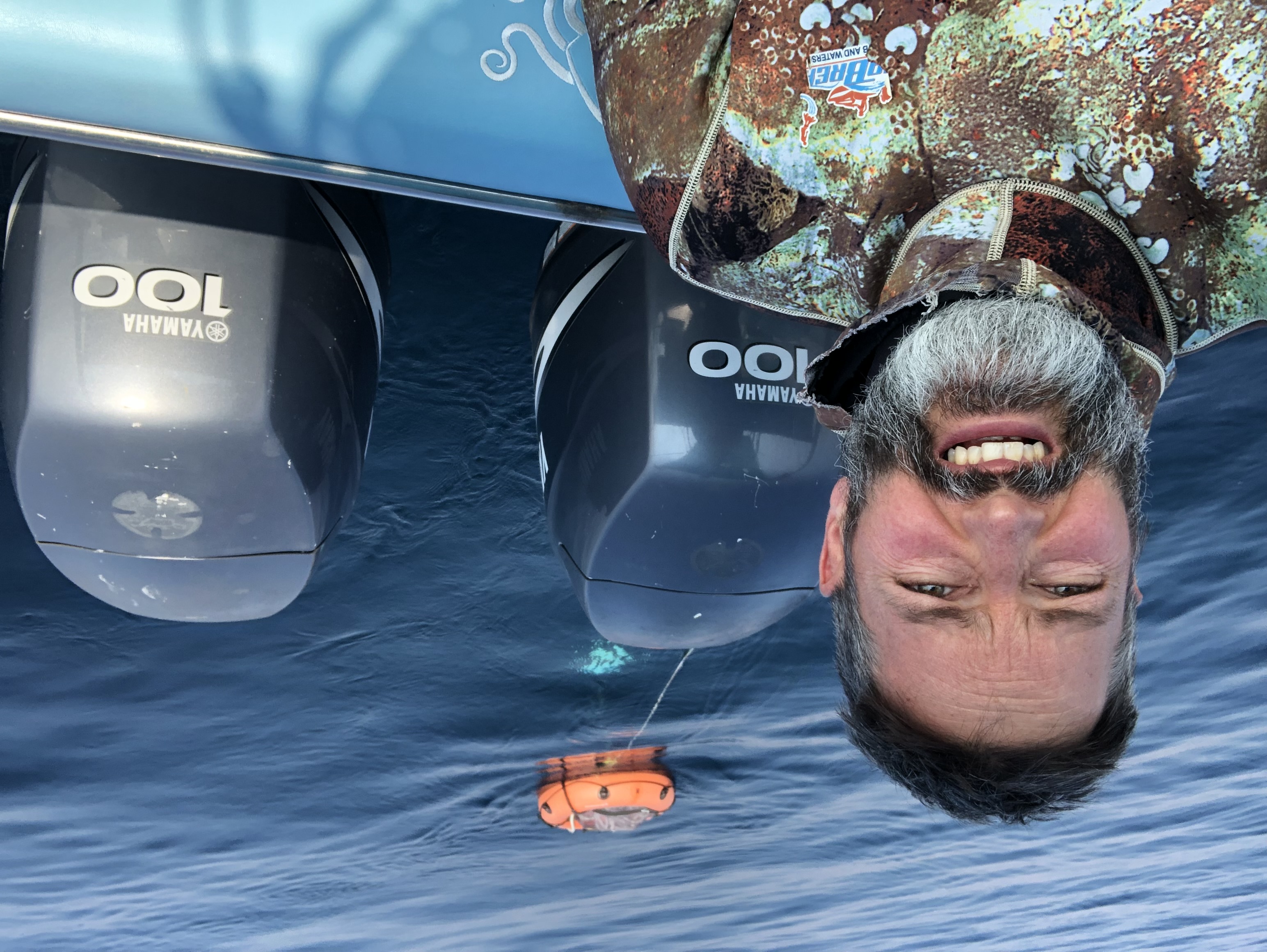
I trained with world-champion freedivers, whose entire sport is a masterclass in nervous system regulation. Panic underwater doesn't just feel bad, it burns oxygen and is life threatening. Freedivers don't leave their nervous system to chance, they use their breath to control it and flip the switch deliberately. That's the same switch Ocean Breeze™ teaches you to use on dry land.
What Your Vagus Nerve Actually Does
Quick version, because the full version deserves its own series: the vagus nerve is the main cable of your parasympathetic nervous system, your "rest and digest" mode. Your other mode is commonly known as your "fight or flight." mode. Your vagus nerve runs from your brainstem to your heart, lungs, and gut, which is why a change in your breathing can show up as a change in your heart rate within seconds. But your vagus nerve is bi-directional which means in addition to your brain sending signals to the rest of your body, your body can send signals to your brain. You can't order your vagus nerve to fire on command, but you can influence it directly.
Breathing is your Remote Control
You don't need to understand every detail of your nervous system in order to better regulate it. Firstly your nose is important. Nasal breathing, specifically, has been shown to directly synchronise activity in the amygdala and hippocampus, the brain's fear and memory circuits, in a way mouth breathing doesn't. That's not a minor detail, it's a key reason "breathe through your nose" is worth taking seriously.
Here's something else worth knowing: it's you exhale, not your inhale, that switches your body into rest and digest mode. Structured breathwork built around a long exhale has been shown to outperform mindfulness meditation for reducing stress in as little as 5 minutes a day.
Why Ocean Breeze™ Isn't Just Cyclic Sighing
Cyclic sighing is a great starting point, and the full comparison is in Cyclic Sighing vs Ocean Breeze™: The Real Difference. Ocean Breeze™ goes further. The 4th element in the OCEAN framework I teach, the A in OCEAN, is acoustic exhalation. I'm not going to teach it here, that's what the 14-Day Ocean Breeze™ Challenge is for, but I'll tell you this: in my own experience, it's the fastest way I've found to feel calmer and more in control in any situation. My clients also agree.
Neurosurgeon Kevin J. Tracey, one of the leading researchers on the vagus nerve, is careful not to overclaim what lifestyle tools can do. But even in his cautious framing, breathing clearly matters: each inhale and exhale sends information through vagus-linked pathways, helping coordinate heart rate, recovery, and the body’s shift between stress and calm. I'm not here to win an argument about exactly which mechanism in your body is doing the work. I'll simply challenge you to try it for yourself, and if 4 minutes sounds a little odd, the article Why 4 Minutes of Breathwork Is Enough covers why it isn't.
Try This First
Here's the challenge, right now, as you're reading. Do a slow, 4-second inhalation through your nose. Pause. Purse your lips as if blowing out a birthday candle, and let out a long, slow exhalation. Do 1 more round. How do you feel?
That's just for starters. Now imagine what 4 minutes of the full Ocean Breeze™ technique could do.
Start the 14-Day Ocean Breeze™ Challenge →
“Your nose is for breathing. Your mouth is for eating.” - Vaughan Wickins